
Composite veneers come up in almost every cosmetic consultation for a simple reason: they solve a real problem — a chipped edge, a gap, a shade you’re not happy with — without the cost or commitment of porcelain. But most of what patients read online before booking is either a sales page with no real numbers, or a forum thread full of second-hand opinions. This article gives you the composite veneers cost as it actually stands, how the treatment works, and what maintaining them day to day looks like.
What Are Composite Veneers?
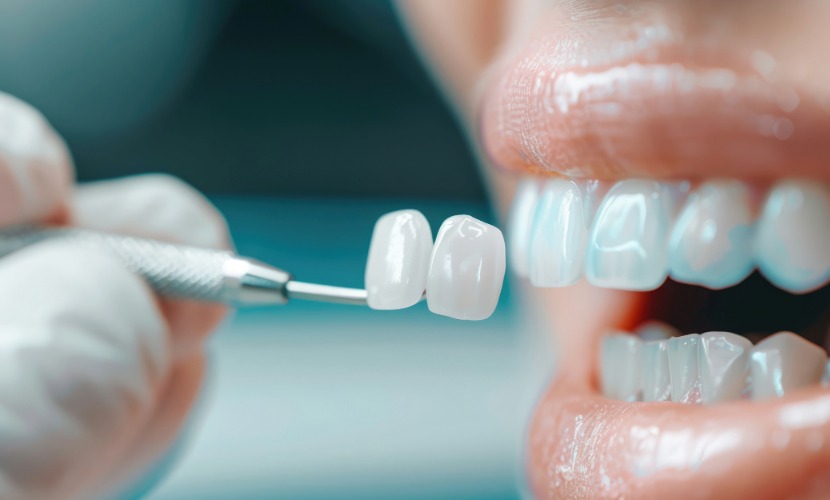
Composite veneers use a tooth-coloured resin, the same material used in cosmetic bonding, applied and sculpted directly onto the front surface of your existing tooth. Unlike porcelain veneers, which are manufactured in a lab from a scan and then bonded on in a second visit, composite is typically built up and shaped chairside, in a single appointment, by your dentist.
There are two common approaches worth knowing before your consultation:
- Freehand/direct composite — the dentist sculpts the resin layer by layer straight onto the tooth, adjusting shape and shade as they go.
- Injected composite veneers — a technique where a pre-planned digital mock-up is used to create a template, and the composite is injected into that template directly onto the tooth. This tends to produce a more predictable, symmetrical shape across multiple teeth, since the outcome is planned digitally before any resin touches your teeth.
Neither technique removes as much natural enamel as a porcelain veneer preparation, which is part of why composite is often the first option discussed for smaller cosmetic changes.
Composite Veneers Cost: What Actually Drives the Price
There’s no single number that applies to every case — cost depends on how many teeth are involved, how much reshaping each one needs, and whether you’re doing a single tooth or a full smile line. What we can give you, instead of a vague “prices vary,” is Condor Dent’s own current published pricing: composite veneers/bonding start from £305 per tooth. For comparison, E-max porcelain veneers are priced from £748 per tooth on the same list — a gap that exists because porcelain involves lab fabrication and holds shade more permanently over time.
A cosmetic consultation (£60) is where that estimate becomes a real, written quote — including a scan, an assessment of how many teeth genuinely need treatment, and a plan for whether direct or injected composite fits your case best.
Composite Veneers Reviews: What Patients Generally Say
Rather than quoting invented testimonials, it’s more useful to be honest about the general pattern dentists see with composite veneers. Patients tend to be satisfied with how quickly the result is achieved — often in a single visit — and with how natural composite can look when shade-matched carefully. The most common piece of feedback, across clinics generally, isn’t about the initial result; it’s about maintenance: composite needs more regular polishing and occasional touch-ups than porcelain to stay looking fresh, and patients who go in expecting that tend to be happiest with the long-term outcome.
Keeping Composite Veneers White
This is where most of the confusion online actually lives. Composite is more porous than porcelain, which means it’s more prone to picking up staining from coffee, tea, red wine and smoking over time — and it’s also more sensitive to abrasive whitening methods than natural enamel is.
Should you whiten composite veneers with baking soda? We’d rather answer this directly than dodge it: no, and it’s worth explaining why rather than just saying so. Baking soda is a mechanical abrasive — it works on natural enamel by gently scrubbing away surface staining, but composite resin scratches more easily than enamel does. Regular use can dull the surface finish, leave it looking matte rather than polished, and in some cases make future staining worse, not better, because a scratched surface holds pigment more easily.
What actually works: professional polishing at a routine hygiene visit restores shine without abrading the material, and avoiding prolonged exposure to strong staining drinks — or rinsing with water after them — does more for long-term colour than any home remedy. If shade is a recurring frustration, that’s worth raising at a review appointment (from £49) rather than experimenting with kitchen-cupboard fixes on cosmetic work you’ve already paid for.
Is Composite the Right Choice for You?
Composite veneers make the most sense for smaller cosmetic corrections — a chip, a gap, mild discolouration on one or two teeth — where a same-day result and a lower cost per tooth matter more than maximum longevity. If you’re looking at a full smile line with multiple teeth needing significant shape correction, it’s worth discussing porcelain alongside composite at your consultation, since the higher upfront cost of porcelain can work out more cost-effective over several years if composite would otherwise need repeated touch-ups.
Book a Composite Veneers Consultation
If you want a real number instead of a general range, a cosmetic consultation at Condor Dent (£60) includes a scan and a written treatment plan comparing composite and porcelain options for your specific case, with the total cost confirmed before you decide on anything.
Message us on WhatsApp or book online to get started.

FAQ
How much do composite veneers cost?
At Condor Dent, composite veneers/bonding start from £305 per tooth (current published price), compared with £748 per tooth for E-max porcelain veneers. The exact cost depends on how many teeth are treated and confirmed at a £60 cosmetic consultation.
What’s the difference between composite veneers and injected composite veneers?
Freehand composite is sculpted directly onto the tooth by the dentist; injected composite veneers use a digitally planned template that composite is injected into, giving a more predictable, symmetrical shape when several teeth are treated together.
Can I whiten composite veneers with baking soda?
No — baking soda is abrasive and can scratch the composite resin surface, dulling its shine and making future staining worse. Professional polishing at a hygiene visit is the safer way to restore shine.
How long do composite veneers last before needing a touch-up?
Composite is less colour-stable and less resistant to wear than porcelain, so it typically needs polishing or minor touch-ups more often — the exact interval depends on habits like smoking, coffee/tea intake, and how the veneers are cared for.
Are composite veneers reversible?
Composite veneers remove less natural tooth structure than porcelain, so in many cases they’re closer to reversible — but any preparation is a clinical decision made case by case, not a blanket guarantee.
