
Dentistry is entering a new phase in which technology no longer serves only as support for treatment, but increasingly becomes part of how diagnosis, planning and prevention are carried out from the very first appointment. Among all recent developments, artificial intelligence is emerging as one of the most influential forces shaping how modern dental care will evolve over the coming years.
For patients, this does not mean being treated by machines. It means clinicians now have access to more advanced systems that can analyse images, compare data and support decisions with greater speed and precision than traditional methods alone.
Artificial intelligence is already changing how dental professionals identify patterns that may not always be obvious during a routine examination. From radiographic interpretation to treatment simulation, the integration of intelligent systems is making dentistry more predictive, more personalised and in many cases more preventive.
At clinics that combine digital workflows with modern clinical judgement, this evolution is already visible in daily practice.
At Condor Dent, technological innovation is increasingly part of how treatment decisions are approached, helping patients understand options more clearly and solve dental problems with greater confidence.
Why AI Dentistry Is Becoming Part of Everyday Clinical Practice
The idea of AI dentistry often sounds futuristic, yet many of its applications are already present in routine dental care.
Artificial intelligence works by processing large amounts of information and recognising patterns that help clinicians interpret data more efficiently.
In dentistry, this may involve:
- analysing radiographs
- identifying early bone loss
- detecting subtle caries patterns
- comparing previous scans
- supporting treatment sequencing
Importantly, artificial intelligence does not replace clinical expertise.
Instead, it acts as a second analytical layer that helps clinicians make better-informed decisions.
This is especially useful in complex cases where small details influence long-term outcomes.
The combination of digital systems and human interpretation is becoming one of the strongest trends in modern dental care.
A broader view of how digital systems are already transforming dentistry can be explored here:
How Dental AI Tools Improve Diagnosis Without Replacing Dentists

One of the most practical advances involves the use of dental AI tools during diagnosis.
Modern software can now assist in evaluating radiographic images by highlighting anatomical areas that deserve closer attention.
This can help clinicians detect:
- early lesions
- minor bone changes
- root positioning
- implant planning limitations
- hidden structural details
These systems are particularly valuable because they improve consistency.
A clinician may already suspect a small issue, but digital assistance can confirm whether that area requires deeper investigation.
This becomes especially relevant in preventive dentistry, where early identification often changes treatment completely.
The goal is not automation for its own sake, but stronger diagnostic support.
Why Patients Benefit from Smarter Treatment Planning
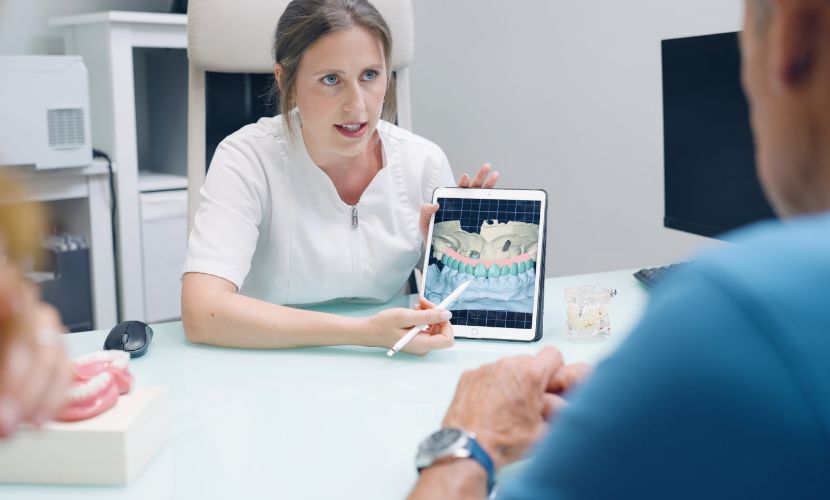
Artificial intelligence becomes even more valuable when diagnosis connects directly with treatment planning.
Once digital information is collected, clinicians can organise treatment more accurately and often explain it more clearly to patients.
This improves understanding because patients can visualise:
- possible treatment stages
- predicted outcomes
- structural limitations
- alternative approaches
For many people, uncertainty often delays treatment more than discomfort itself.
When digital systems make treatment easier to understand, patients often feel more comfortable proceeding.
That clarity is increasingly important in modern dentistry, especially for implant, orthodontic and restorative cases.
The Rise of Smart Dentistry in Preventive Care

One of the most promising aspects of smart dentistry is prevention.
Rather than waiting for visible symptoms, digital systems increasingly help identify risks earlier.
This includes changes that may appear small clinically but become significant over time.
Examples include:
- subtle enamel wear
- gum changes
- bite alterations
- early occlusal stress patterns
When identified early, these issues often require simpler intervention.
This is one reason regular check-ups remain essential even as technology advances.
Preventive care still depends on continuity, not only on technology itself.
For families seeking structured preventive care, this approach fits naturally with regular maintenance plans such as:
Why Artificial Intelligence Supports Implant Decisions
Implant dentistry is one of the fields where intelligent systems are becoming increasingly useful.
Before placing an implant, clinicians must evaluate multiple variables simultaneously.
Artificial intelligence can help organise and interpret digital imaging more efficiently by supporting analysis of:
- bone volume
- implant angulation
- neighbouring roots
- prosthetic space
- anatomical limitations
This does not decide treatment automatically, but it improves planning precision.
The stronger the planning stage, the more predictable the final result becomes.
This is particularly important when comparing treatment alternatives.
A useful reference for understanding implant decision-making appears here:
Why Technology Still Depends on Clinical Judgement
One common misunderstanding is that intelligent systems can replace the dentist’s judgement.
They cannot.
Artificial intelligence processes data, but it does not understand personal priorities, biological variation or individual treatment preferences in the same way a clinician does.
Two patients may present similar scans yet require different decisions because their expectations, oral history and functional conditions differ.
This is why technology works best when integrated into careful clinical reasoning rather than used independently.
The most advanced dentistry remains human-led.
How Dental AI Tools May Change Future Appointments
Over the next few years, patients will likely notice intelligent systems becoming more visible during routine consultations.
This may include:
- faster radiographic interpretation
- digital risk comparisons
- more precise follow-up records
- clearer treatment simulation
These changes will not necessarily make appointments feel more technological.
Instead, they will often make conversations clearer and more focused.
Patients may simply notice that explanations become easier to understand.
That is often the most important practical difference.
Why Booking Early Still Matters in the Era of Smart Dentistry
Even with advanced technology, early consultation remains essential.
Artificial intelligence improves what clinicians can detect, but only if patients attend before problems become advanced.
A consultation at Condor Dent allows early digital evaluation and a clearer understanding of whether immediate treatment is necessary.
In many cases, earlier diagnosis still means simpler solutions.
Technology improves outcomes most when used early, not only when problems are already severe.
FAQs About AI Dentistry
Can AI dentistry diagnose problems without a dentist?
No. It supports diagnosis, but the final clinical decision remains human.
Are dental AI tools already used in modern clinics?
Yes. Many digital systems already assist image interpretation and planning.
Is smart dentistry only useful for complex treatments?
No. It is also highly valuable in preventive care.
Will artificial intelligence make treatment faster?
Sometimes it improves efficiency, but its main advantage is better precision.
Should I still attend regular check-ups if technology is improving?
Absolutely. Early monitoring remains essential.

